Yesterday, the plan was to spend a large portion of the day experimenting with home-made batteries.. there’s a book called “Geek Mom” that details the actual experiment we tried. The website is here but I couldn’t find the experiment on there (have a look at the other stuff, though) Let’s just say that it involved making batteries out of drinking straws, copper wire/galvanised zinc wire, tissues and vinegar, then wiring each battery together as “legs” stuck to a plastic bowl, and connecting it all to a pair of LED “eyes” – ta da! Spider!
Ever felt calm, confident, and excited about a project you were just about to jump into? That was me, yesterday morning. The instructions I’d copied out were precise, and warned that they had to be followed precisely to achieve success. If you find the book (it’s in our local library), I would urge you to follow the instructions precisely…
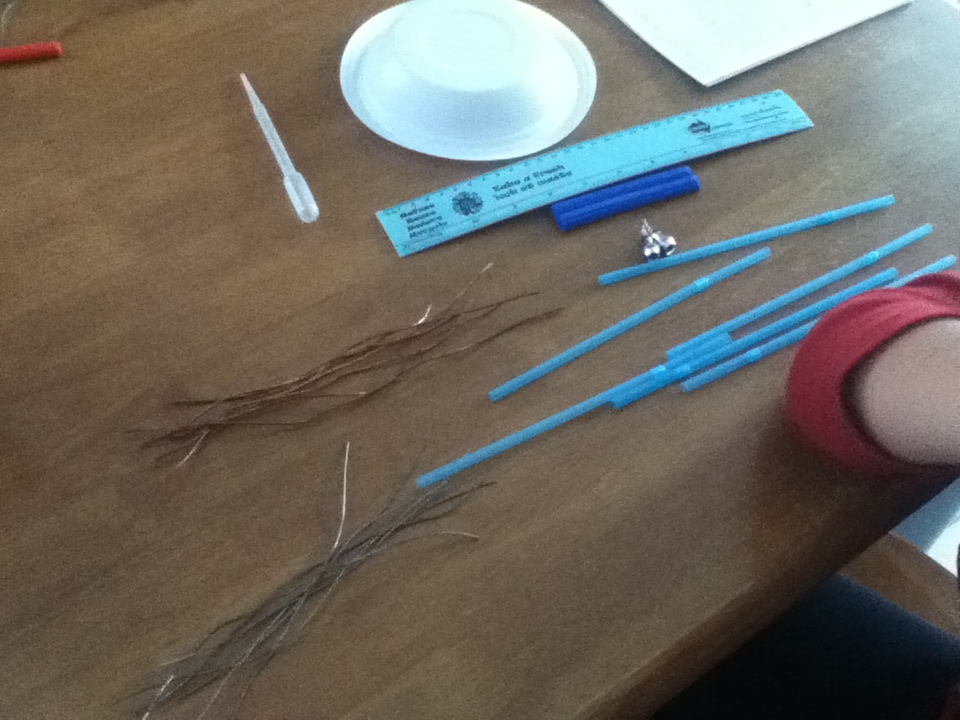
We had the straws, we had the LED lights (2V, as specified) The plastic bowl was a substitution for a styrofoam bowl… I figured the weight was the significant feature. That, and the fact that I couldn’t find any styrofoam bowls. The pipette was to draw the vinegar and inject it into the straws. The first major problem came with the wire. We didn’t have fresh wire – we did have scraps of copper and (supposedly) zinc wire hanging about. Why not snip those into the appropriate lengths? Then, we had no hot glue gun (to seal the straws), but we did have modelling clay. That should be adequate to seal the tiny openings of the straws.
Armed, still, with optimism, but fairly clueless with everything else, we started to assemble…
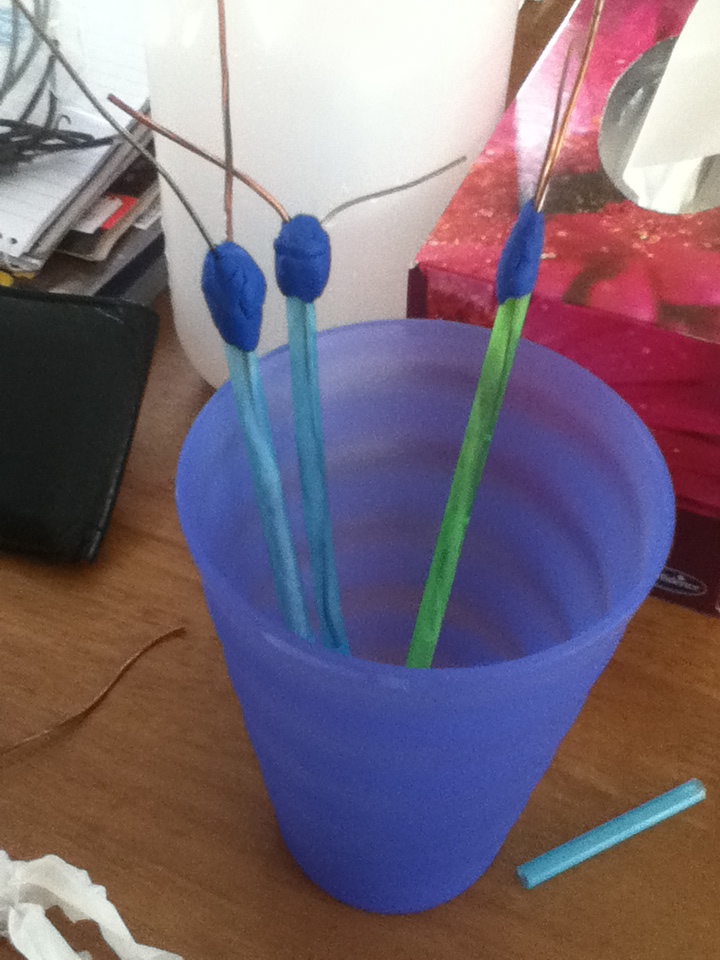
The batteries are fairly simple – the end of the straw is sealed off, the copper wire (positive terminal) is wrapped in a thin layer of tissue to keep it separate from the zinc wire (negative terminal), then both wires are inserted into the straw. The straw is filled with white vinegar (acid conducts electricity) and the other end is sealed. The first problem was with the modelling clay – it seals, but it’s not strong enough to keep the straw sealed unless it’s treated very gently. Bending wires and twisting them together doesn’t treat modelling clay gently. The other problem was that the copper wire was thicker that the zinc – something I’d vaguely registered as not too important, but caused problems when trying to twist them together, while simultaneously trying to keep the straws upright and sealed…
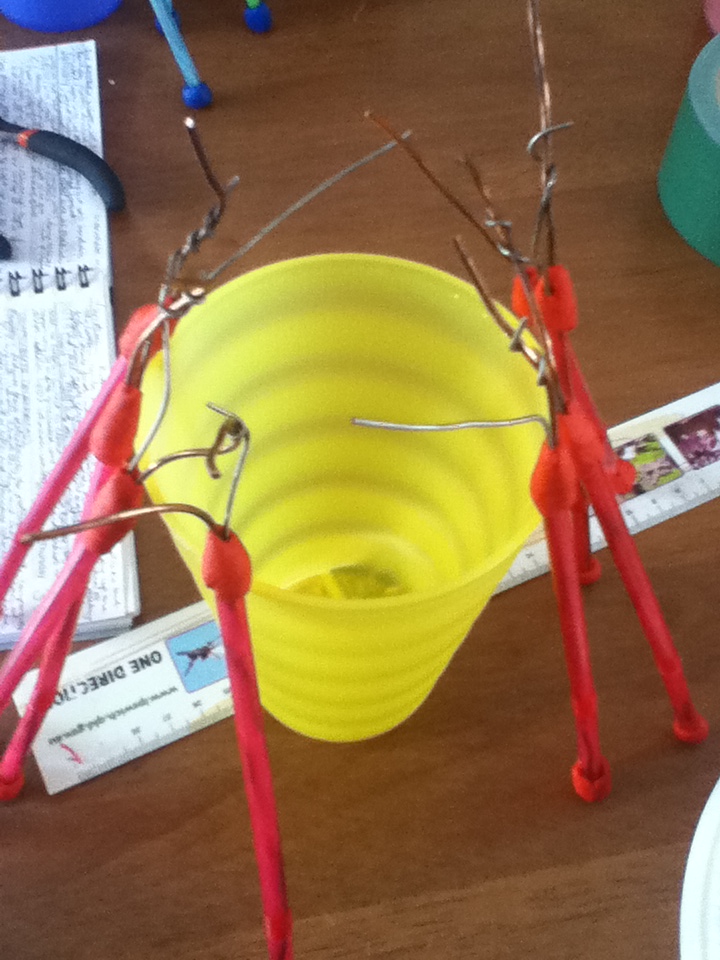
The zinc twisted easily around the copper, but tended to slip off with handling if we couldn’t hook the copper somehow around the zinc. Nevertheless, we eventually got something resembling the needed circuit – positive terminals to negative terminals, connected to look like spider “legs” (complete with bendable knees)
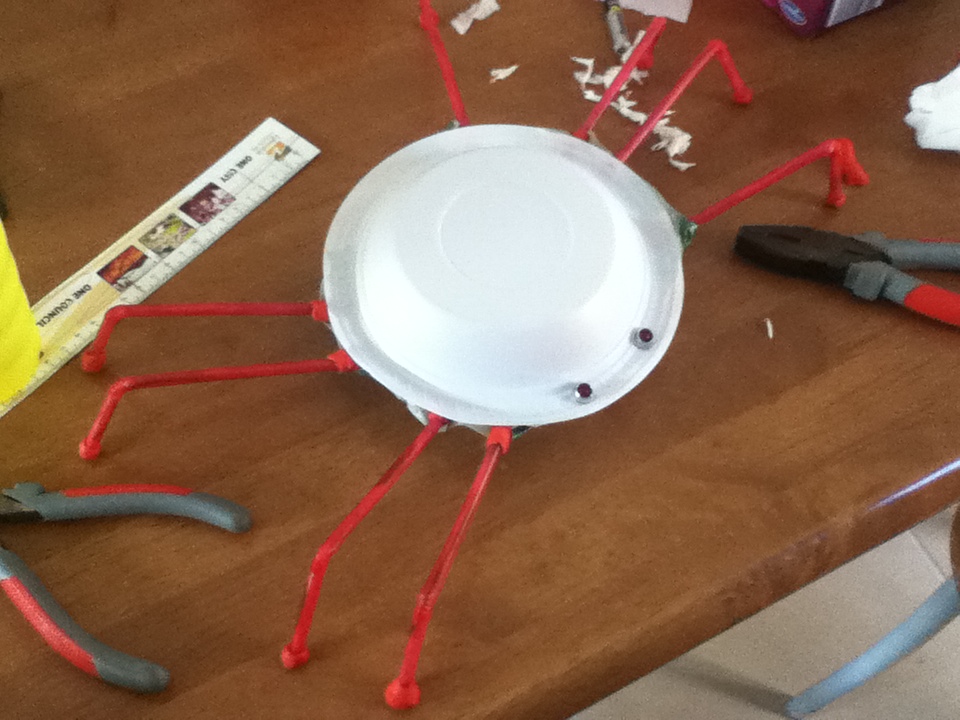
The legs were stuck to the underside of the bowl with electrical tape, and the remaining wires were attached to the eyes. Which steadfastly refused to shine.
There could be many reasons why it didn’t work – substandard components, not enough voltage. It was a frustrating end result.
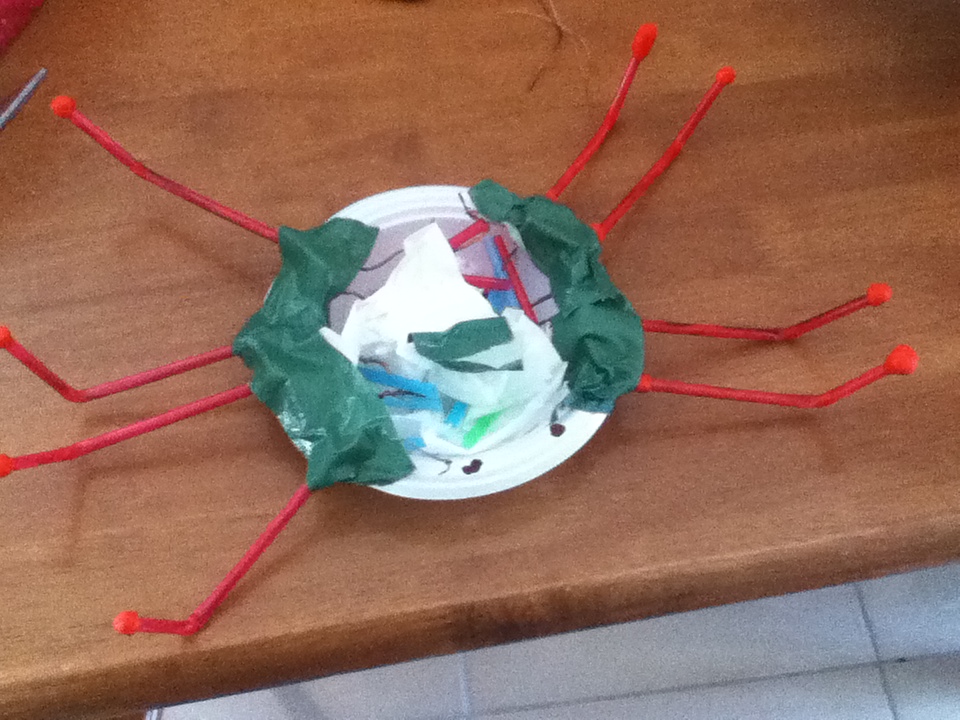
Dead and blinded spider (I saved the LEDs – the rest went in the bin.)
There was a lot of stress and emotion flying about. In the end, we still learned – just not what I had hoped. We still covered the basic theory, and we recovered enough to attempt a second spider (each boy had their own project going) Hubby put the second one together, just in case I’d skipped something obvious without realising it… and also to apply more force to the wire-twisting problem..
I found it interesting to watch the learning styles of each of my sweet beans. One of them dives in head first and starts putting things together, without stopping to listen to instructions. The other, when things don’t go perfectly (as they generally don’t), throws his hands up in despair and declares it all useless. Each reaction causes its own problems, and makes imparting knowledge to them a sometimes tricky prospect.
We didn’t get cool, light-up spiders. We did learn a little more about perseverance, and working together despite our different personalities and styles.
We also tried a basic lemon battery, although that didn’t generate enough power to light the LED. I gather that an average lemon produces 7/10 of a volt, so I hoped that connecting two lemons and a lime might get it working.
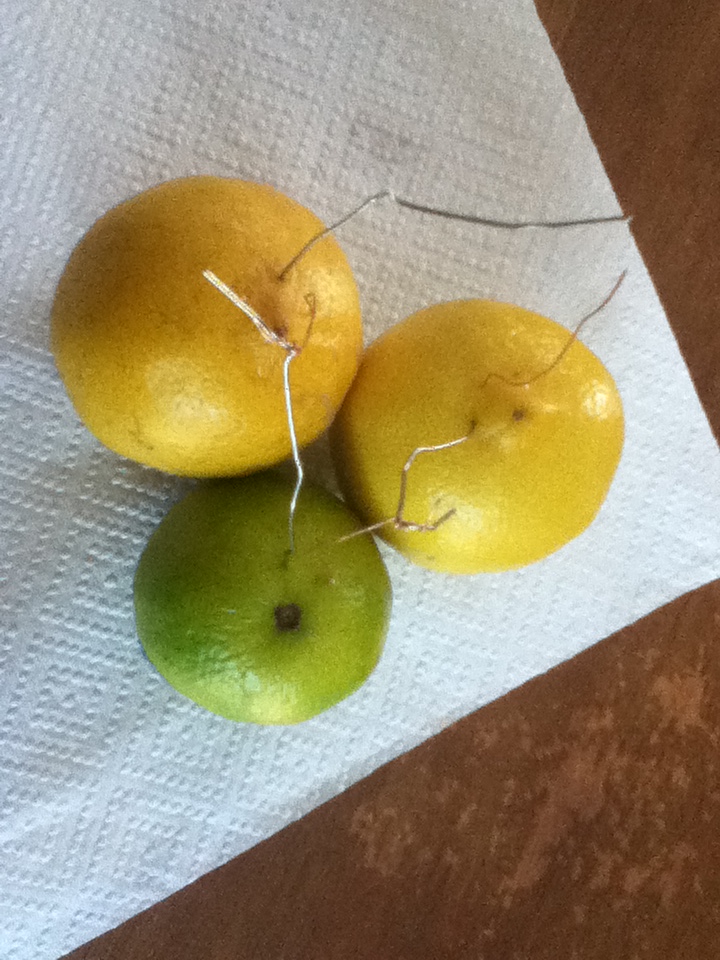
It didn’t.
We tried the “tongue test”, though (touching the tongue to the terminal wires) The boys just felt a “funny taste”, but I think that was a weak current…
So – not the original plan. Still valuable…





 1000 Fields of Roses